


Is 304 or 316 better for a kitchen?

Is 304 or 316 better for a kitchen?
For most typical kitchens, 304 stainless steel is the better (and more common) choice due to its excellent corrosion resistance, durability, and lower cost. However, for harsh, high-salt, or coastal environments, 316 stainless steel is superior because it offers stronger resistance to chloride corrosion and pitting, albeit at a higher price. 304 stainless steel is ideal for sinks, appliances, and general use, while 316 stainless steel provides extra protection against corrosion caused by salt spray or strong cleaning agents.
Is 304 stainless steel better suited for cooking than 316 stainless steel?
In food-grade applications, the debate over which stainless steel, 316 or 304, is better suited for food use becomes particularly important. Both types of stainless steel meet food safety standards, but 316 stainless steel has superior resistance to chloride corrosion, making it ideal for environments involving salty or acidic foods.

304 Stainless Steel
304 is the most common grade of stainless steel and is widely used in various electrical appliances. Although it is resistant to oxidation, it can be corroded by chlorides and salts. It is commonly used in kitchen equipment, tableware, pipes and fittings, and military vehicles.
316 Stainless Steel
316 stainless steel is commonly used in marine and chemical storage equipment. It is very durable, easy to clean and weld, and has excellent corrosion and heat resistance. 316 stainless steel has several variants, such as 316L, which has a lower carbon content than 316. Therefore, 316L is more resistant to higher temperatures and stronger corrosion than 316, but it is more susceptible to acid corrosion.
Chemical Composition Comparison: 304 vs 316 Stainless Steel
| Element | 304 Stainless Steel | 316 Stainless Steel |
|---|---|---|
| Chromium (Cr) | 18.0 – 20.0% | 16.0 – 18.0% |
| Nickel (Ni) | 8.0 – 10.5% | 10.0 – 14.0% |
| Molybdenum (Mo) | - | 2.0 – 3.0% |
| Carbon (C) | ≤ 0.08% | ≤ 0.08% |
| Manganese (Mn) | ≤ 2.00% | ≤ 2.00% |
| Silicon (Si) | ≤ 1.00% | ≤ 1.00% |
| Phosphorus (P) | ≤ 0.045% | ≤ 0.045% |
| Sulfur (S) | ≤ 0.03% | ≤ 0.03% |
| Iron (Fe) | Balance | Balance |
Mechanical Properties Comparison: 304 vs 316 Stainless Steel
| Property | 304 Stainless Steel | 316 Stainless Steel |
|---|---|---|
| Tensile Strength (MPa) | ~505 | ~515 |
| Yield Strength (MPa) | ~215 | ~205 |
| Elongation (% in 50mm) | ~70% | ~60% |
| Hardness (Brinell HB) | 201 | 217 |
| Hardness (Rockwell B) | 92 | 95 |
316 Stainless Steel vs. 304 Food-Grade Stainless Steel: Basic Knowledge
In food-grade applications, the choice between 316 and 304 stainless steel is crucial. Both grades of stainless steel meet food safety standards, but 316 stainless steel offers superior resistance to chloride corrosion, making it ideal for environments handling salty or acidic foods. On the other hand, 304 stainless steel is an excellent choice for general food processing due to its cost-effectiveness.
Strength and Durability: Comparing the Strength of 304 Stainless Steel and 316 Stainless Steel
When comparing the strength of 304 and 316 stainless steel, both grades perform well under mechanical stress. However, 316 stainless steel is slightly superior due to its higher tensile strength and better performance in harsh environments. This makes 316 stainless steel an ideal choice for heavy-duty kitchen equipment.
Corrosion Resistance: Comparing the Corrosion Resistance of 304 Stainless Steel and 316 Stainless Steel
The corrosion resistance of 304 and 316 stainless steel is one of the most important factors to consider. 316 stainless steel exhibits superior resistance to rust and corrosion, especially when exposed to seawater, acidic foods, or cleaning agents. While 304 stainless steel also has some corrosion resistance, it is more susceptible to pitting and crevice corrosion under highly corrosive conditions.
Reasons to choose 304 stainless steel:
Standard kitchens: The standard choice for most home kitchens.
Appliances and sinks: Commonly used in ovens, refrigerators, dishwashers, and standard sinks.
Cost-effective: Cheaper than 316 stainless steel.
Good corrosion resistance: Handles everyday cooking and cleaning well.
Reasons to choose 316 stainless steel:
Coastal/high-salt environments: Essential for outdoor kitchens or homes near the sea.
Harsh chemicals: Better corrosion resistance against strong cleaning agents or acidic/high-salt foods (e.g., pickled foods, seafood).
Marine grade: Stronger resistance to pitting and corrosion caused by chlorides.
High-end applications: When you need to maximize durability in harsh environments and can accept a higher cost.
Summary: 304 stainless steel is suitable for 90% of kitchens; 316 stainless steel is for specific harsh environments requiring extra protection against salt and chemical corrosion.
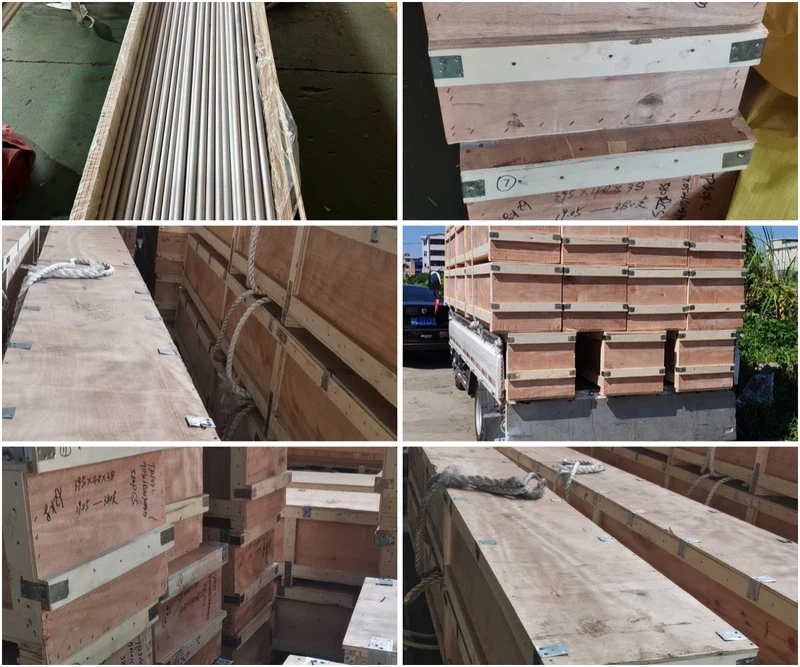
Gnee Steel specializes in the production of a wide range of stainless steel products. Gnee Steel's product packaging includes: Steel Strapping: Pipes with an outer diameter of 3 inches or less are typically strapped together with polypropylene film to prevent rust during ocean shipping, and then secured with steel strapping. Wooden Cases/Crates: Pipes are typically packaged in wooden cases or crates to protect the pipes during transportation, especially those that are longer or have larger diameters. Seaworthy Export Packaging: Suppliers typically use standard seaworthy export packaging methods, which may include a variety of materials and techniques to protect the pipes during transportation. Tarpaulin Packaging: This prevents rain, seawater, and other external factors from penetrating the export crates during transportation. Gnee Steel specializes in the production and sale of alloy materials. Gnee Steel's products are widely used in the aerospace, chemical, power, automotive, and nuclear energy sectors, and we can provide customized alloy material solutions based on customer needs. For alloy material pricing or customized alloy material solutions, please contact us for a quote: ru@gneesteelgroup.com