


Inconel 600 vs. 601 Sheet Metal Comparison: Corrosion-Resistant Solutions for Chemical Processing

Inconel 600 vs. 601 Sheet Metal Comparison: Corrosion-Resistant Solutions for Chemical Processing
In the complex field of chemical equipment manufacturing, choosing the wrong alloy can lead to catastrophic failures, unplanned downtime, and huge economic losses. Inconel 600 (UNS N06600) and Inconel 601 (UNS N06601) are two of the most commonly used "mainstay" alloys.
Although both are based on nickel-chromium alloys, their performance differs significantly in specific corrosive environments. This comparative analysis will help your engineering team select the most cost-effective material for your next project.
How machinable is Inconel 601?
It exhibits excellent water and corrosion resistance, high mechanical strength, and is easy to form, process, and weld. These properties make Inconel 601 a widely used material in fields such as heat treatment, chemical processing, pollution control, aerospace, and power generation.

1.Inconel 600 vs. 601 Sheet Specification
| Grade | Inconel 600 | UNS N06600, Inconel 601 | UNS N06601 |
| Standard | ASTM B168 / ASME SB168 |
| Thickness | 0.1mm To 12 mm |
| Size | 1000 mm x 2000 mm, 1220 mm x 2440 mm, 1500 mm x 3000 mm, 2000 mm x 2000 mm, 2000 mm x 4000 mm |
| Finish | Hot rolled plate (HR), Cold rolled sheet (CR), 2B, 2D, BA NO(8), SATIN (Met with Plastic Coated) |
| Form | Sheets, Plates, Coils, Slatting Coils, Perforated Coils, Foils, Rolls, Plain Sheet, Shim Sheet, Strip, Flats, Blank (Circle), Ring (Flange) |
| Hardness | Soft, Hard, Half Hard, Quarter Hard, Spring Hard etc. |
Need advice? Contact us now to speak with our professionals
Grade Specification
| STANDARD | WERKSTOFF NR. | UNS | JIS | BS | GOST | AFNOR | EN |
| Inconel 600 | 2.4816 | N06600 | NCF 600 | NA 13 | МНЖМц 28-2,5-1,5 | NC15FE11M | NiCr15Fe |
| Inconel 601 | 2.4851 | N06601 | NCF 601 | NA 49 | XH60BT | NC23FeA | NiCr23Fe |
Chemical composition of Inconel 600 and Inconel 601
| Grade | C | Mn | Si | S | Cu | Fe | Ni | Cr |
| Inconel 600 | 0.15 max | 1.00 max | 0.50 max | 0.015max | 0.50 max | 6.00 – 10.00 | 72.00 min | 14.00 – 17.00 |
| Inconel 601 | 0.10 max | 1.00 max | 0.50 max | 0.015max | 1.00 max | Balance | 58.0 – 63.0 | 21.0 – 25.0 |
Chemical Principles of Corrosion Resistance: The Role of Aluminum
The most crucial difference between these two alloys lies in their chemical composition, particularly the addition of aluminum (Al) to Alloy 601.
Inconel 600:
Primarily composed of nickel (approximately 72%) and chromium (approximately 15.5%). Its high nickel content gives it excellent resistance to chloride stress corrosion cracking and alkaline solution corrosion.
Inconel 601:
Slightly lower nickel content (approximately 60%), but with the addition of 1.0%–1.7% aluminum. This small addition is crucial. Aluminum allows the alloy surface to form an extremely stable and highly adhesive alumina (Al₂O₃) oxide layer, providing superior high-temperature oxidation protection compared to Alloy 600.
inconel 600 and inconel 601 Mechanical Properties
| Element | Density | Melting Point | Tensile Strength | Yield Strength (0.2%Offset) | Elongation |
| Inconel 601 | 8.1 g/cm3 | 1411 °C (2571 °F) | Psi – 80,000 , MPa – 550 | Psi – 30,000 , MPa – 205 | 30 % |
2. Which Alloy is Suitable for Which Situation?
As experts in corrosion resistance, we recommend selecting the appropriate Inconel grade based on the specific "threat" of your chemical process:
Inconel 600 is suitable for:
Caustic alkali and alkaline processes: Excellent resistance to caustic soda and potassium hydroxide.
High-purity water systems: Due to its resistance to high-purity water, it is the standard material for primary loop water systems in nuclear reactors.
Ammonia environments: Resistant to nitriding, widely used in magnesium chloride processing.
Inconel 601 is suitable for:
Oxidizing acid environments: Performs better in high-temperature environments containing oxidizing acids.
Sulfur-containing gases: The alumina layer prevents sulfidation reactions in petrochemical and furnace atmospheres.
Heat treatment equipment: Suitable for components such as radiant tubes and furnaces that require circulating heating above 1000°C.
Download the technical comparison table for 600 and 601
3. Why Choose Gnee Steel
As a Tier 1 supplier to China's chemical industry, we can provide your engineering team with the necessary technical support:
Batch Consistency: Precise control of aluminum and chromium content ensures uniform corrosion rates throughout the vessel.
Quality Certification: Each sheet comes with a factory test certificate (EN 10204 3.1).
Custom Processing Support: We offer Inconel sheets in various thicknesses and sizes to minimize weld seams in reactors.

🛠 Unsure which grade is right for your process?
Our professionals are ready to review your project specifications and recommend the most durable and cost-effective alloy.
Request pricing for alloys 600 and 601
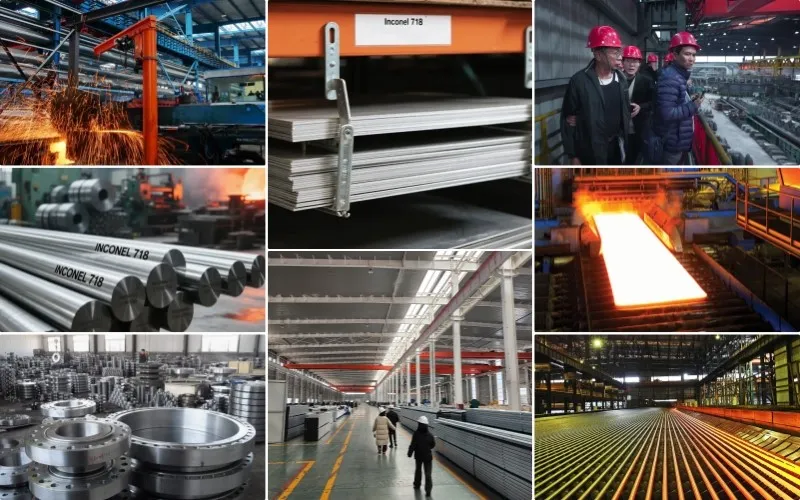
Gnee Steel is a professional manufacturer of various nickel-based alloys, including Nickel 201, Nickel 202, Hastelloy C-276, Hastelloy C-22, Hastelloy B, Hastelloy C-4, Inconel Alloy 600, Inconel 625, Inconel 718, Inconel X-750, Incoloy Alloy 800, Incoloy 800H/HT, Incoloy 825, Monel Alloy 400, Monel K500, and high-temperature alloys. We specialize in the production and sales of alloy materials. Gnee Steel's products are widely used in aerospace, chemical, power, automotive, and nuclear energy industries, and we can provide customized alloy material solutions according to customer needs. For alloy material price inquiries or to request customized alloy material solutions, please feel free to contact us at ru@gneesteelgroup.com for a quote.
FAQ
Q: Can Inconel 601 replace Inconel 600 in corrosive environments?
A: Generally not. While 601 is an excellent alloy, its lower nickel content makes it slightly less resistant to high concentrations of corrosive solutions than Inconel 600.
Q: Which alloy is easier to weld and suitable for large chemical storage tanks?
A: Both have excellent weldability. However, when welding Inconel 601, a matching welding wire (e.g., ERNiCrFe-11) must be used to ensure the weld has the same oxidation resistance as the base metal.
Q: Do you offer Inconel 600/601 cladding for carbon steel storage tanks?
A: Yes, we offer high-quality Inconel plates suitable for explosive fusion welding or weld overlay cladding, providing a corrosion barrier for large carbon steel containers.