


Are you tired of frequent maintenance due to 310S stainless steel pipe failures? While 310S pipe is a commonly used heat-resistant steel, it is prone to failure under long-term thermal stress at 700-800°C. GH3030 superalloy pipe is an aerospace-grade solution specifically designed to address this problem. As a professional nickel alloy manufacturer, we offer GH3030 as a superior alternative to 310S, significantly extending the lifespan of your industrial components.
Request comparative data on GH3030 and 310S materials
GH3030 High Temperature Alloy Steel Pipe | An Excellent Alternative to 310S Steel

GH3030 High Temperature Alloy Steel Pipe | An Excellent Alternative to 310S Steel
Both GH3030 and 310S tubing are designed for high-temperature applications, but their compositions differ significantly. GH3030 is a nickel-based superalloy (suitable for higher temperatures and more demanding environments), while 310S is an austenitic chromium-nickel stainless steel (more common and cost-effective).
Why is GH3030 better suited than 310S for 800℃ burner components?
At 800℃, 310S stainless steel forms a thick oxide layer that eventually peels off, leading to thinner walls and nozzle clogging. GH3030 (nickel-chromium based), on the other hand, forms a thin, tough oxide layer that protects the metal surface, extending its service life by 3-5 times compared to 310S.

Why does 310S fail at 800°C?
For many engineers, 310S (a nickel-iron-chromium alloy) seems theoretically good enough. However, in a real-world oxidizing atmosphere at 800°C, 310S exhibits the following problems:
Oxide scale: The protective layer on the surface of 310S is unstable and easily peels off, leading to rapid thinning of the wall thickness.
Grain coarsening: Prolonged heating causes the grain size of 310S to increase, making it brittle and prone to cracking.
Low creep strength: Under sustained loads, 310S will "stretch" and deform, ultimately leading to catastrophic failure.
GH3030 Solution:
GH3030 is a nickel-based superalloy (nickel content > 75%). It forms a tough, self-healing oxide layer and maintains a stable grain structure, thus ensuring the integrity of heating elements and combustion linings.
Click to get GH3030 pipe samples
1. Chemical composition of GH3030 high-temperature alloy pipe and 310S steel
| Element (%) | GH3030 (Nickel Superalloy) | 310S (Stainless Steel) | Benefit of GH3030 |
| Nickel (Ni) | Balance (Approx. 75.0) | 19.0 - 22.0 | Superior oxidation resistance & stability |
| Chromium (Cr) | 19.0 - 22.0 | 24.0 - 26.0 | Balanced corrosion resistance |
| Titanium (Ti) | 0.15 - 0.35 | - | Refines grain structure, prevents coarsening |
| Iron (Fe) | ≤ 1.50 | Balance | Lower Fe means less scaling at high temp |
2. Mechanical properties of GH3030 high-temperature alloy pipes and 310S steel at 800℃
| Mechanical Performance at 800°C | GH3030 | 310S |
|---|---|---|
| Creep Rupture Strength | Nearly 2.5x the duration of 310S under the same thermal load | – |
| Tensile Strength (Rm) | ≥ 685 MPa | ~520 MPa |
| Elongation | ≥ 35% (Maintains high plasticity for welding and forming) | – |
Click to download the GH3030 alloy tube PDF file now
3. Applications of GH3030 and 310S tubing
310S tubing is commonly used in industrial furnaces, heat exchangers, and petrochemical equipment where high temperatures are required but a full high-temperature alloy solution is not feasible.
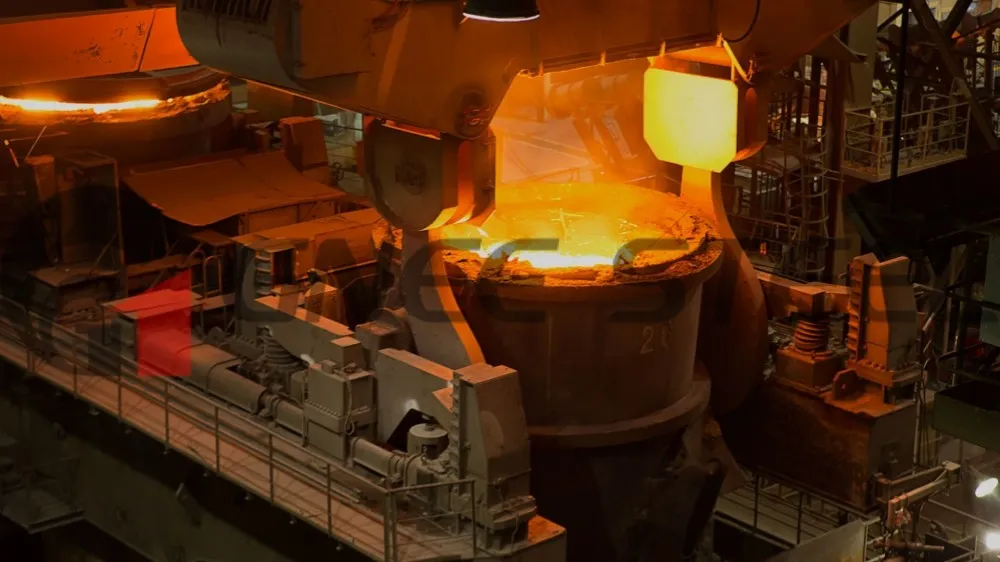
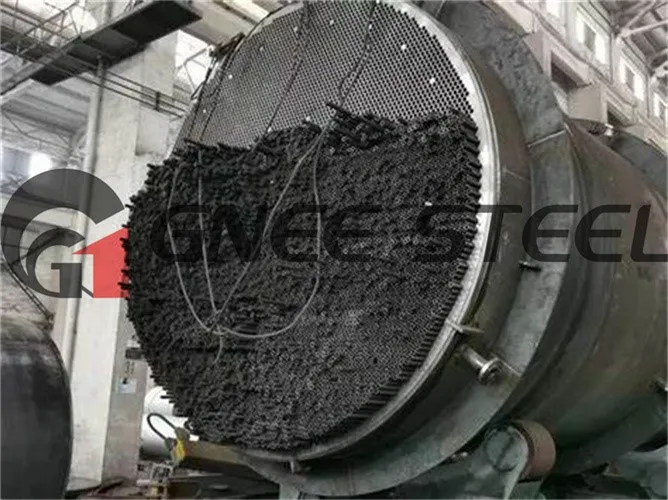

GH3030 tubing is primarily used in more critical applications such as aerospace engine components and nuclear reactor components.


4. How to Choose Between GH3030 and 310S
310S is suitable for high-temperature furnace components, fuel burners, and applications requiring moderate corrosion resistance, and is reasonably priced.
GH3030 is suitable for aerospace or harsh chemical environments where any failure is unacceptable, thus requiring exceptional strength and oxidation resistance.
Contact our professionals to recommend alloys suitable for your project
5. Efficiency Benefits of Using GH3030
Switching to GH3030 superalloy material is not just a technological upgrade, but a financial revolution.
Reduced Maintenance: 3 times longer service life means less downtime for replacements.
Lower Total Cost of Ownership: While the initial cost is higher, the significant reduction in downtime and labor costs more than offsets this advantage.
Reliable MRO Support: We have stock on hand for immediate aircraft and industrial furnace repairs, ensuring your operations never stop.

Contact us now to get the latest export price for GH3030 in 2026
FAQ
Q1: Is GH3030 compatible with my existing 310S welding setup?
A: Yes. GH3030 has excellent welding performance. It can be welded to itself or to 310S using matching nickel-based filler metals (like ErNiCr-3). It does not require complex pre-heating, making it an easy drop-in replacement.
Q2: Does GH3030 cost much more than 310S?
A: Per kilogram, GH3030 is more expensive due to its high Nickel content. However, when you factor in that GH3030 lasts 3 to 5 times longer in 800°C environments, the cost-per-service-hour is significantly lower than 310S.
Q3: What certifications do you provide for GH3030 tubing?
A: As a professional superalloy supplier, we provide full EN 10204 3.1 Mill Test Certificates (MTC), including chemical analysis, tensile testing at room and high temperatures, and 100% NDT (Eddy Current/Ultrasonic) reports.