


ASTM A249 TP304L austenitic stainless steel welded pipe for pharmaceutical industry
Gnee Steel
ASTM A249 TP304L austenitic stainless steel welded pipe for pharmaceutical industry
For the pharmaceutical industry, TP304L welded steel pipe conforming to ASTM A249 is a low-carbon stainless steel with excellent corrosion resistance, weldability, and a clean surface finish, making it ideal for high-purity applications. Its main advantages include: compliance with ASTM A249/ASME SA249 standards; low carbon content to help prevent sensitization during welding; and a variety of surface treatments, such as bright annealing (BA) and 8K mirror polishing, ensuring a smooth and hygienic surface.

Gnee Steel
What are the specifications of 304 stainless steel pipe?
The specifications of 304 stainless steel pipe include its composition (18% chromium, 8% nickel), mechanical properties (e.g., minimum yield strength 30,000 PSI and tensile strength 75,000 PSI), and physical properties (e.g., density 7.93 g/cm³ and melting point 1400 to 1450°C). The pipes are manufactured to meet various standards, such as ASTM A312, and are available in seamless or welded constructions, as well as different sizes, wall thickness grades, and length specifications.

ASTM A249 TP304L Austenitic Stainless Steel Welded Tubes for the Pharmaceutical Industry
The ASTM A249 standard covers austenitic stainless steel welded tubes for high-temperature applications such as boilers, superheaters, heat exchangers, and condensers. The TP304L grade is a low-carbon version of TP304, offering excellent corrosion resistance and improved weldability. Its composition and properties make it suitable for a wide range of industrial applications, particularly those requiring high resistance to oxidation and high-temperature strength.
Chemical Composition of TP304L Pipe
| Element | Percentage (%) |
|---|---|
| Carbon (C) | ≤ 0.03 |
| Chromium (Cr) | 18.0 – 20.0 |
| Nickel (Ni) | 8.0 – 12.0 |
| Manganese (Mn) | ≤ 2.0 |
| Silicon (Si) | ≤ 1.0 |
| Phosphorus (P) | ≤ 0.045 |
| Sulfur (S) | ≤ 0.03 |
| Iron (Fe) | Balance |
ASTM A249 TP304L austenitic stainless steel welded pipe Mechanical Properties
| Property | Value |
|---|---|
| Tensile Strength | ≥ 515 MPa (75 ksi) |
| Yield Strength (0.2%) | ≥ 205 MPa (30 ksi) |
| Elongation | ≥ 35% |
| Hardness (HRB) | ≤ 90 |
Manufacturing and Finishing for the Pharmaceutical Industry
Welding: Advanced welding techniques, such as TIG welding, are employed to create clean and strong welds. For critical applications, 100% X-ray welding is also available.
Surface Finishing: Surface finishes such as bright annealing (BA), 8K, or mirror polishing are essential for the pharmaceutical industry because they create a smooth, seamless surface that is easy to clean and prevents microbial growth.
Heat Treatment: Bright annealing is a critical post-weld process that cleans the surface and improves the roughness of the tubing, making it easier to clean and install.
Key Documents and Tests
Certificates: Material Testing Certificates (MTCs) conforming to standards such as EN 10204/3.1B must be provided to verify material performance and traceability.
Tests: Additional tests are typically required to meet pharmaceutical standards. These tests may include:
100% Radiographic (X-ray) Testing
Ultrasonic Testing (UT)
Third-Party Inspection Reports
Surface Roughness Measurement
Manufacturing Process
The manufacturing process of ASTM A249 TP304L welded pipe is as follows:
Forming: Stainless steel strip is rolled into a cylindrical shape.
Welding: Advanced welding techniques, such as tungsten inert gas (TIG) welding, are used to ensure clean and strong welds.
Annealing: After welding, the pipe is annealed to relieve internal stress and improve mechanical properties.
Pickling and Passivation: The pipe undergoes surface treatment to remove impurities and enhance corrosion resistance.
Testing: The pipe undergoes rigorous testing to ensure compliance with ASTM A249 standards, including:
Hydraulic pressure testing
Non-destructive testing (NDT)
Dimensional inspection
Applications
ASTM A249 TP304L welded pipe is widely used in industries requiring high corrosion resistance and mechanical strength. Common applications include:
Heat Exchangers: Used for heat transfer in the chemical, oil, and gas industries.
Boilers and Superheaters: Capable of withstanding high pressure and high temperature environments.
Food processing equipment: Favored for its hygienic properties and resistance to organic acids.
Pharmaceutical and medical equipment: Ensures hygienic operation due to its non-reactive surfaces.
Condensers: Used in cooling and condensation processes in power plants.
Chemical processing: Effectively withstands corrosive chemical environments.
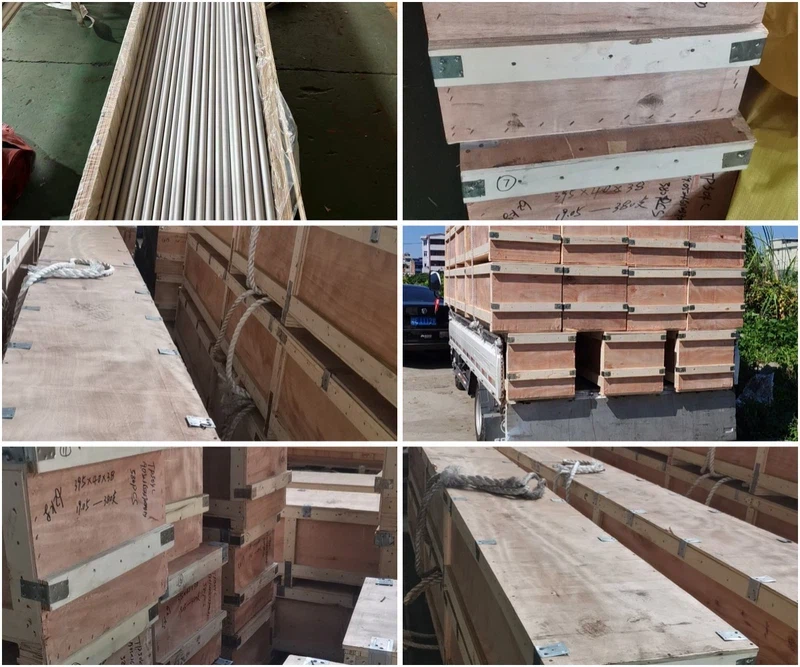
Gnee Steel specializes in the production of a wide range of stainless steel products. Gnee Steel's product packaging includes: Steel Strapping: Pipes with an outer diameter of 3 inches or less are typically strapped together with polypropylene film to prevent rust during ocean shipping, and then secured with steel strapping. Wooden Cases/Crates: Pipes are typically packaged in wooden cases or crates to protect the pipes during transportation, especially those that are longer or have larger diameters. Seaworthy Export Packaging: Suppliers typically use standard seaworthy export packaging methods, which may include a variety of materials and techniques to protect the pipes during transportation. Tarpaulin Packaging: This prevents rain, seawater, and other external factors from penetrating the export crates during transportation. Gnee Steel specializes in the production and sale of alloy materials. Gnee Steel's products are widely used in the aerospace, chemical, power, automotive, and nuclear energy sectors, and we can provide customized alloy material solutions based on customer needs. For alloy material pricing or customized alloy material solutions, please contact us for a quote: ru@gneesteelgroup.com

