


A comprehensive comparison of Inconel 625 alloy and Hastelloy C-276 alloy
Gnee Steel
A comprehensive comparison of Inconel 625 alloy and Hastelloy C-276 alloy
Inconel 625 boasts superior high-temperature strength, oxidation resistance, and enhanced resistance to organic acids, making it ideal for aerospace and marine applications. Hastelloy C-276, with its higher molybdenum content, performs exceptionally well in strongly reducing/acidic environments (such as hydrochloric acid), making it ideal for chemical processing; however, C-276 is typically more expensive. Both are nickel-based high-strength alloys, but 625's chromium content enhances its oxidation resistance, while C-276's molybdenum content enables it to withstand reducing environments.

Gnee Steel
When to use Hastelloy C276 tubing?
These tubings are commonly used in applications involving strong acids such as sulfuric acid, hydrochloric acid, and phosphoric acid. Hastelloy C276 tubing can withstand the corrosiveness of these strong acids, making it suitable for components in equipment such as chemical reactors, distillation columns, heat exchangers, and scrubbers.

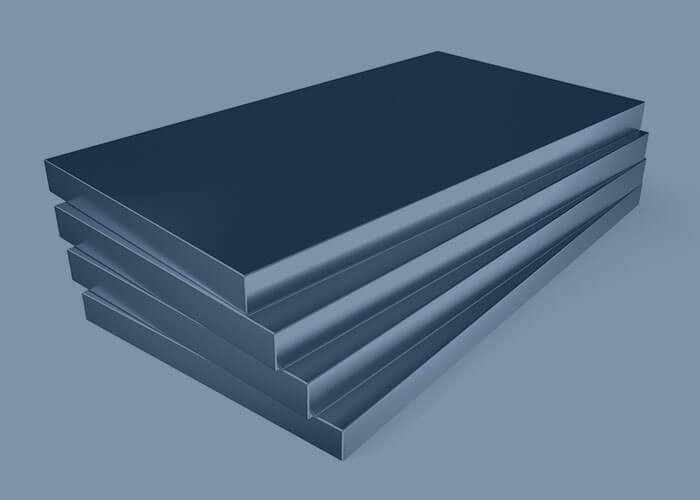
What is Inconel Alloy 625?
inconel nickel-chromium alloy 625 (UNS N06625 / W.Nr. 2.4856) is widely used due to its high strength, excellent machinability (including joining properties), and outstanding corrosion resistance. Its operating temperature range is from low temperatures to 1800°F (982°C).
What is Hastelloy Alloy C-276?
Hastelloy C-276 alloy (UNS N10276) was the first forged nickel-chromium-molybdenum alloy material. Its extremely low carbon and silicon content effectively alleviated many concerns during the welding process. As a result, it has been widely used in the chemical and related industries and has a proven track record of excellent performance for up to 50 years in many corrosive chemical environments.
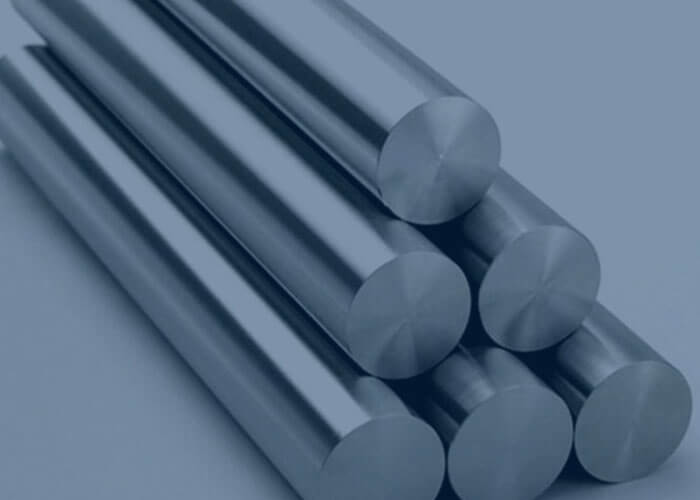
Inconel Alloy 625 vs Hastelloy Alloy C-276 Chemical Composition
| Element | Inconel 625 Content (%) | Hastelloy C-276 Content (%) |
|---|---|---|
| Nickel (Ni) | 58.0 min | Balance |
| Chromium (Cr) | 20.0 - 23.0 | 14.5 - 16.5 |
| Iron (Fe) | 5.0 max | 4.0 - 7.0 |
| Molybdenum (Mo) | 8.0 - 10.0 | 15.0 - 17.0 |
| Niobium (Nb) + Tantalum | 3.15 - 4.15 | - |
| Carbon (C) | 0.10 max | 0.01 max |
| Manganese (Mn) | 0.50 max | 1.0 max |
| Silicon (Si) | 0.50 max | 0.08 max |
| Phosphorus (P) | 0.015 max | 0.04 max |
| Sulfur (S) | 0.015 max | 0.03 max |
| Aluminum (Al) | 0.40 max | - |
| Titanium (Ti) | 0.40 max | - |
| Cobalt (Co) | 1.0 max | 2.5 max |
| Tungsten (W) | - | 3.0 - 4.5 |
| Vanadium (V) | - | 0.35 max |
Alloy 625 vs hastelloy c-276 Mechanical Properties
Alloy 625 Mechanical Properties
| Density | Melting Point | Tensile Strength | Yield Strength (0.2%Offset) | Elongation |
| 8.4 g/cm3 | 1350 °C (2460 °F) | Psi – 135,000 , MPa – 930 | Psi – 75,000 , MPa – 517 | 42.5 % |
Alloy C276 Mechanical Properties
| Element | Yield Strength (0.2%Offset) | Melting Point | Density | Tensile Strength | Elongation |
| C276 | Psi – 52,000 , MPa – 355 | 1370 °C (2500 °F) | 8.89 g/cm3 | Psi – 1,15,000 , MPa – 790 | 40 % |
Corrosion Resistance Comparison of Inconel 625 and Hastelloy C-276 Alloys
Inconel 625 and Hastelloy C-276 have very similar nickel and iron contents; the main difference lies in their chromium and molybdenum contents.
Inconel 625 has a higher chromium content, which enhances its oxidation resistance. This makes it perform better in oxidizing environments such as concentrated sulfuric acid and nitric acid.
On the other hand, Hastelloy C-276 contains more molybdenum, which gives it excellent corrosion resistance in reducing environments such as hydrochloric acid and hydrogen sulfide. This makes Hastelloy C-276 perform better under these conditions.
High-Temperature Performance
Operating temperature
Engineers typically evaluate the high-temperature performance of alloys when selecting for harsh environments. Both Inconel 625 and Hastelloy C-276 offer excellent performance, but their operating temperature ranges differ. Inconel 625 excels in maintaining mechanical properties and structural integrity at high temperatures. This alloy can operate continuously at temperatures up to 982°C (1800°F). Scientific studies have confirmed that Inconel 625 retains its resistance to deformation and ductility even at temperatures up to 1150°C. These results highlight the alloy's suitability for applications requiring reliable high-temperature performance.
While Hastelloy C-276 is known for its corrosion resistance, its maximum operating temperature is lower. This alloy performs best below 427°C (800°F). Above this temperature, its mechanical properties may degrade, limiting its application in extreme high-temperature environments. The table below summarizes the maximum operating temperatures of the two alloys:
| Alloy | Maximum Service Temperature (°C) | Maximum Service Temperature (°F) |
|---|---|---|
| Inconel 625 | 982 | 1800 |
| Hastelloy C-276 | 427 | 800 |
Oxidation Resistance
Oxidation resistance plays a crucial role in high-temperature performance. Inconel 625 forms a stable oxide layer, protecting the alloy from further corrosion. This property allows the alloy to withstand harsh environments, including temperature fluctuations and corrosive gas environments. The high nickel and chromium content in Inconel 625 enhances its oxidation resistance, making it a preferred material in aerospace and power generation fields.
Hastelloy C-276 also exhibits good oxidation resistance, but its high-temperature performance is not as good as Inconel 625. This alloy has a lower chromium content, thus relying more on molybdenum and tungsten for protection. While Hastelloy C-276 demonstrates good oxidation resistance in many chemical processing environments, its long-term durability at extreme high temperatures may not be as good as Inconel 625.
Weldability and Fabrication
Weldability
Weldability plays a crucial role in engineers' material selection for harsh environments. Inconel 625 alloy exhibits excellent weldability, especially when using advanced techniques such as cold metal transfer (CMT). This process, with its low heat input, helps control iron dilution in the weld overlay. Studies have shown that keeping the iron content below 0.5% improves corrosion resistance. The microstructure of Inconel 625 welds typically features a dendritic core with segregation of niobium and molybdenum. These characteristics affect its resistance to intergranular corrosion, particularly near the fusion boundary. Testing methods such as dual-ring electrochemical potentiodynamic reactivation (DL-EPR) and ASTM G28-02 help assess weld quality and corrosion resistance.
Hastelloy C-276 alloy also exhibits good weldability, but typically requires strict control of heat input and post-weld treatment. The molybdenum content in this alloy creates a concentration gradient during welding, which can affect its corrosion resistance. While direct comparison of weld test results is limited, both alloys meet stringent industry standards for weldable products.
| Aspect | Inconel 625 (IN625) Weld Overlay | Hastelloy C-276 Welds (Comparative Mention) |
|---|---|---|
| Fabrication Process | Cold Metal Transfer (CMT) technology with low heat input, | Traditional welding processes (e.g., GTAW) referenced indirectly |
| resulting in low Fe dilution (<0.5 wt%) in weld overlay | ||
| Fe Content Control | Fe content controlled below 0.5% to improve corrosion | No explicit Fe content data provided |
| resistance; uniform Fe distribution confirmed by SEM-EDS | ||
| Microstructure | Dendritic core and interdendritic regions with Nb and Mo | Mo concentration gradient affects corrosion resistance |
| segregation; microstructure evolution affects IGC resistance | ||
| Corrosion Testing Methods | DL-EPR test and ASTM G28–02 method used to evaluate IGC | Mentioned in context of Mo gradients affecting corrosion |
| Corrosion Resistance Findings | IGC resistance increases with distance from substrate; high | Corrosion resistance differences interpreted via Mo gradient |
| susceptibility near fusion boundary due to microstructure | ||
| Comparative Welding Outcomes | CMT process improves corrosion resistance compared to GTAW | No direct welding test outcomes comparing both alloys given |
| but worst IGC resistance still near substrate interface |
Fabrication
| Product Form / Welding Material | Inconel 625 ASTM Standards | Hastelloy C-276 ASTM Standards |
|---|---|---|
| Seamless Pipe and Tubing | B444, B829 | B622, B983 |
| Welded Pipe | B705, B775, B704, B751 | B619, B626 |
| Welding Accessories | B366 | B366, B462 |
| Rods and Strips | B446 | B574 |
| Forgings | B564 | B564, B462 |
| Plate, Sheet, and Tape | B443 | B575 |
Applications of Inconel 625 and Hastelloy C276
| Application Sector | Inconel 625 Highlights | Hastelloy C-276 Highlights |
|---|---|---|
| Aerospace | High-temp strength, oxidation resistance | Used in corrosive media, limited by temp. strength |
| Marine | Seawater corrosion, fatigue resistance | Superior localized corrosion resistance |
| Chemical Processing | Oxidizing/non-oxidizing chemicals, halides | Reducing acids, halide species, reactors |
| Oil & Gas | Offshore platforms, stress corrosion resistance | Sour gas, aggressive fluids |
| Pulp & Paper | Bleach plants, chlorine-based oxidizers | Less common, used in harsh chemical zones |

Gnee Steel is a professional manufacturer of various nickel-based alloys, including Nickel 201, Nickel 202, Hastelloy C-276, Hastelloy C-22, Hastelloy B, Hastelloy C-4, Inconel Alloy 600, Inconel 625, Inconel 718, Inconel X-750, Incoloy Alloy 800, Incoloy 800H/HT, Incoloy 825, Monel Alloy 400, Monel K500, and high-temperature alloys. We specialize in the production and sales of alloy materials. Gnee Steel's products are widely used in aerospace, chemical, power, automotive, and nuclear energy industries, and we can provide customized alloy material solutions according to customer needs. For alloy material price inquiries or to request customized alloy material solutions, please feel free to contact us at ru@gneesteelgroup.com for a quote.