


321 vs 347 Stainless Steel
Gnee Steel
321 vs 347 Stainless Steel
Both 321 and 347 are stabilized austenitic stainless steels, the main difference being their stabilizers: 321 uses titanium (Ti), while 347 uses niobium (Nb/Niobium); both prevent carbide precipitation, thus improving resistance to intergranular corrosion, but 347 is often used in welding consumables and high-temperature petrochemical applications because its niobium has better transfer properties in high-temperature arcs, while 321 performs well in the titanium-stabilized temperature range (up to about 900°C).

Gnee Steel
What are the uses of 321 stainless steel?
Chemical equipment: 321 stainless steel is commonly used in chemical processing plants where equipment needs to withstand high temperatures and corrosive substances. It is an ideal material for heat exchangers, pressure vessels, and storage tanks.

321 Stainless Steel
321 stainless steel (UNS S32100 / EN 1.4541) is an austenitic stainless steel alloy containing titanium as an alloying element. The addition of titanium enhances its resistance to intergranular corrosion, especially during welding and high-temperature operations. Due to its excellent corrosion resistance at high temperatures, 321 stainless steel is commonly used in exhaust systems, jet engine components, and high-temperature chemical processing.
347 Stainless Steel
347 stainless steel (UNS S34700 / EN 1.4550) is an austenitic stainless steel characterized by its composition and specific properties. It is one of the 300 series stainless steels, which are known for their corrosion resistance, durability, and heat resistance. A significant feature of 347 stainless steel is the addition of niobium (Nb), also known as yttrium, to its composition. This element plays a crucial role in improving the steel's properties, especially in high-temperature and corrosive environments.
Chemical Composition of 347 and 321 Stainless Steel
| Element | Grade 347 Stainless Steel | Grade 321 Stainless Steel |
|---|---|---|
| C | 0.08 | 0.08 |
| Mn | 2.00 | 2.00 |
| Si | 0.75 | 0.75 |
| P | 0.045 | 0.045 |
| S | 0.030 | 0.030 |
| Cr | 17.0-19.0 | 17.00 – 19.00 |
| Ni | 9.0-13.0 | 9.00 – 12.00 |
| Mo | – | – |
| N | – | 0.1 |
Physical Properties of 321 vs 347 Stainless Steel
| Physical Property | 321 Stainless Steel | 347 Stainless Steel |
|---|---|---|
| Density (g/cm³) | 7.93 | 7.96 |
| Melting Point (°C) | Approx. 1400 | Approx. 1400 |
| Coefficient of Thermal Expansion | 16.5 x 10^-6 /°C | 16.5 x 10^-6 /°C |
| Thermal Conductivity (W/m·K) | 16.3 (100°C) / 21.5 (500°C) | 16.3 (100°C) / 21.5 (500°C) |
| Young's Modulus (GPa) | 193 | 193 |
| Electrical Resistivity (μΩ·cm) | 72 (20°C) / 86 (500°C) | 72 (20°C) / 86 (500°C) |
Mechanical Properties of 321 vs 347 Stainless Steel
| Mechanical Property | 321 Stainless Steel | 347 Stainless Steel |
|---|---|---|
| Tensile Strength (MPa) | 515 – 730 | 515 – 655 |
| Yield Strength (0.2% offset) (MPa) | ≥205 | ≥205 |
| Elongation (%) | ≥40 | ≥40 |
| Hardness (Brinell HB) | ≤217 (Annealed) | ≤217 (Annealed) |
High temperature resistance and corrosion resistance of 321 and 347 stainless steel
High temperature resistance: creep and oxidation
Shared Advantages: Both 321 and 347 stainless steels offer superior high-temperature creep and stress-breaking properties compared to 304/304L stainless steels. Their maximum continuous service temperatures range from approximately 900°C to 925°C.
Niobium Advantages: Due to the inherent stability of niobium carbide, 347 stainless steel generally exhibits a slight edge in maintaining mechanical strength and creep properties at high temperatures. In certain extreme high-temperature and high-pressure applications (such as nuclear power or supercritical boilers), 347H (the high-carbon version) is a better choice.
Corrosion resistance: intergranular and polysulfide
Intergranular corrosion: This is a design goal for 321 and 347 stainless steels. They exhibit excellent resistance to intergranular corrosion after welding or heat treatment.
Polythiosulfate stress corrosion cracking (PASCC): PASCC is a serious threat to refineries, petrochemical plants, and the oil and gas industry. The stable microstructure of 321 and 347 stainless steels makes them among the best materials for PASCC resistance, thus becoming the standard choice for refinery equipment.
Oxidizing environments: In highly oxidizing environments (such as concentrated nitric acid), data show that 347 stainless steel may have slightly better corrosion resistance than 321 stainless steel.
Equivalent Grades of 321 and 347 Stainless Steel
| Standard | 321 Equivalent | 347 Equivalent |
|---|---|---|
| China (GB) | 1Cr18Ni9Ti | 00Cr19Ni11Nb |
| USA (ASTM) | 321 / 321H | 347 / 347H |
| Europe (EN) | 1.4541 | 1.4550 |
| Japan (JIS) | SUS321 | SUS347 |
| Russia | 08X18H10T | 08X18H10Nb |
Applications of 321 and 347 stainless steel
Applications of 321 Stainless Steel
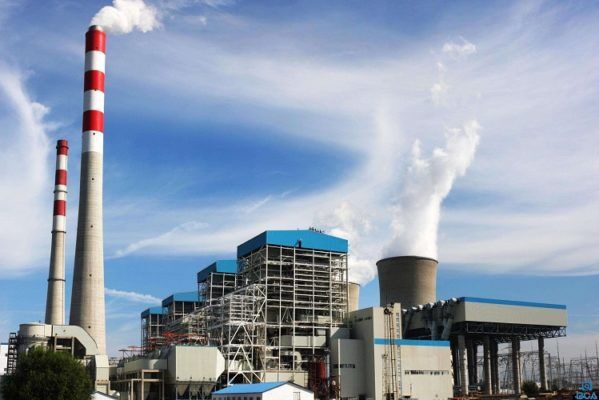
High-Temperature Equipment: The excellent high-temperature oxidation resistance of 321 stainless steel makes it suitable for manufacturing equipment used in high-temperature environments, such as heat exchangers, furnace components, and exhaust systems.
Aircraft Exhaust Systems: 321 stainless steel combines heat resistance and corrosion resistance, making it ideal for aircraft exhaust systems, capable of withstanding the high temperatures and corrosive gases generated during flight.
Food Processing Equipment: The corrosion resistance and low carbon content of 321 stainless steel make it suitable for equipment in the food processing industry, where hygiene and corrosion resistance requirements are extremely high.
Chemical Processing: 321 stainless steel's excellent chemical resistance and high-temperature resistance make it suitable for various chemical processing applications, including reactors, tanks, and piping.
Power Generation: 321 stainless steel is used in power plants for components exposed to high-temperature steam and gases, such as superheaters and reheaters.
Applications of 347 Stainless Steel
Chemical Equipment: 347 stainless steel exhibits excellent corrosion resistance in high-temperature and corrosive environments, making it suitable for chemical equipment, including reactors, heat exchangers, and pipelines.
High-Temperature Piping: 347 stainless steel maintains its performance under high-temperature conditions, making it suitable for pipelines and tubing in various industries such as petrochemicals and power generation.
Aerospace: 347 stainless steel possesses excellent resistance to intergranular corrosion and high-temperature stability, making it suitable for aerospace components such as rocket engine parts, which have extremely high requirements for corrosion resistance and high-temperature performance.
Automotive Exhaust Systems: Similar to 321 stainless steel, 347 stainless steel can be used in automotive exhaust systems to withstand the high temperatures and corrosive gases produced by internal combustion engines.
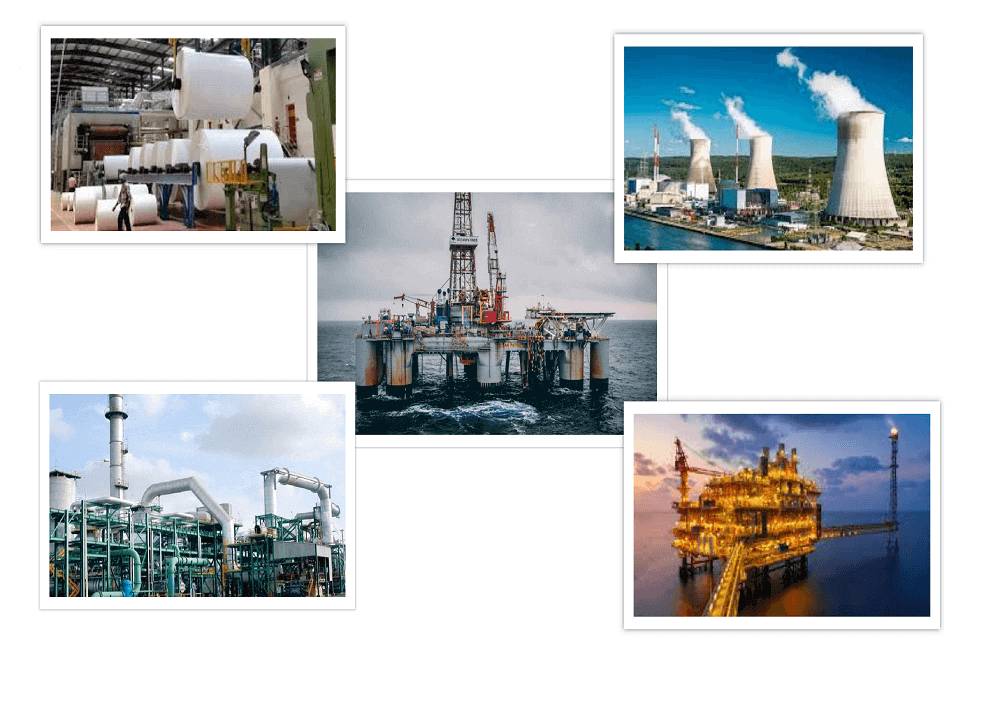
Oil and Gas Industry: 347 stainless steel's excellent corrosion resistance and high-temperature resistance make it an ideal choice for components (including pipelines and processing equipment) in the oil and gas industry.
Gnee Steel also supplies custom stainless steel 321 products in various sizes and specifications. Please send us your drawings for a quote!